One woman’s kidney transplant story: “The best kidney for me.”
Rachel Hornsby received a life-saving kidney transplant because of an organ donor, an excellent medical team – and her own take-charge approach to finding a kidney.
In the mid-1990s, Hornsby learned that she had polycystic kidney disease, a genetic disease that creates cysts in the kidneys. The diagnosis came after her 28-year-old sister died suddenly, and her autopsy revealed the disease. Hornsby’s mother was also diagnosed and started dialysis. In dialysis, a machine pumps a patient’s blood through a filter to remove toxins and waste products, something the kidneys normally do. Hornsby’s mother did not do well on dialysis, however, because her blood clotted easily, and she died at age 58, after a few years of treatment.
“I decided that I was going to arm myself with the best care and make sure that I knew everything I could about this disease,” said Hornsby, a Nashville, Tennessee, resident who is now in her 60s.
She sought out Vanderbilt Health’s nephrology (kidney) and hypertension (high blood pressure) specialists, especially nephrologist Dr. Alp Ikizler. He knew that blood clotting is not typical for polycystic kidney disease patients, so he sent her to a blood specialist, which led to another diagnosis for Hornsby: another genetic disorder, factor V Leiden, which causes blood clotting. Hornsby inherited a gene for it from each of her parents. This explained why her mother did so poorly with dialysis – her blood vessels clotted at each site where a dialysis catheter was inserted.
Hornsby was in an ominous position. She has two genetic diseases, lost two family members whose conditions weren’t fully understood at the time, and she would certainly suffer the same blood clotting on dialysis that contributed to her mother’s death. Though many kidney transplant patients undergo dialysis while they wait for a donated kidney, Hornsby’s best hope was avoiding dialysis.
The kidney transplant wait list vs. a live donor
In December 2013, Hornsby joined the national transplant waiting list for a kidney, which tracks organs donated at the time of someone’s death. Her kidney function was at 20 percent. However, “I didn’t think about being on the list again from that point on,” Hornsby said, “because I knew that it could take between three to five years for the right match.”
More than 100,000 people in the U.S. need a kidney transplant. About 17,000 people receive a kidney each year; 13 people die every day waiting for one. Hornsby knew the odds of finding a kidney donor match from the wait list were against her.
Hornsby contacted Vanderbilt’s Live Donor program. She got more bad news. Tests revealed that she had very high antibodies, thanks partly to her pregnancy with twins. Her sons had a different blood type than Hornsby’s, so her immune system reacted to what it perceived as a foreign threat by creating antibodies that will stay with her for life. Unfortunately, those antibodies were likely to perceive a donated organ as a threat and attack it. This would make her a difficult match with most kidneys.
Hornsby didn’t give up. She continued spreading the word that she needed a live kidney donation, meaning one donated by a living person. (Humans have two kidneys and can live with only one.) A Facebook post she published prompted 21 people to offer to be tested as possible matches. Fourteen were tested; none were a good match. Hornsby realized that finding a well-matched kidney for a direct donation to her was very unlikely.
Paired kidney “exchange” improves chances
The transplant coordinator at Vanderbilt suggested that Hornsby enter a “paired exchange,” a way to find organ matches through a larger pool of people. In such an exchange, one person does not donate a kidney directly to the other person. Instead, two pairs of people trade donations to make two transplants possible.
“Through kidney paired donation, kidney donors are able to give the gift of life to patients in need of kidney transplants even if they are not blood type or immunologically compatible,” said Dr. Heidi Schaefer, Medical Director of the Living Kidney Donor Program. “By donating ‘for’ a patient rather than ‘to’ a patient, other recipients also benefit, making the gift even more impactful.”
Hornsby’s cousin became her “pair partner.” They were matched four times with other pairs for transplants that did not pan out, for various reasons.
“I learned that … the whole process is a roller coaster ride of emotions,” Hornsby said, “and it is most important to focus on getting the exact right kidney that was meant for me.”
Finally, Hornsby’s team found a good exchange pair for her and her cousin: a couple in Ohio. Hornsby’s cousin would donate a kidney to the Ohio man. His wife would donate her kidney to Hornsby, for whom she was a good match. (The wife’s kidney was not a good match for her husband.) Hornsby’s medical team set a transplant date of Aug. 27, 2015. Her kidney function was at 9 percent.
Suddenly, a choice of kidneys
Shortly before that transplant date, Hornsby got an unexpected call from the kidney transplant team at Vanderbilt. A kidney was available from the national wait list, which tracks kidneys donated after someone dies. This kidney was a perfect match for Hornsby, despite her high antibodies.
“That night a family made a very difficult decision to give their loved one’s organs to save the lives of six people,” Hornsby said. “I ended up being one of the six, though it was an intensely hard decision.” It’s rare that someone must choose between two transplant options – a kidney from the wait list versus one from a live donor – and Hornsby, her husband and her team decided “the kidney waiting for me at the hospital was indeed the best one for me.”
Hornsby had her kidney transplant surgery on Aug. 17, 2015.
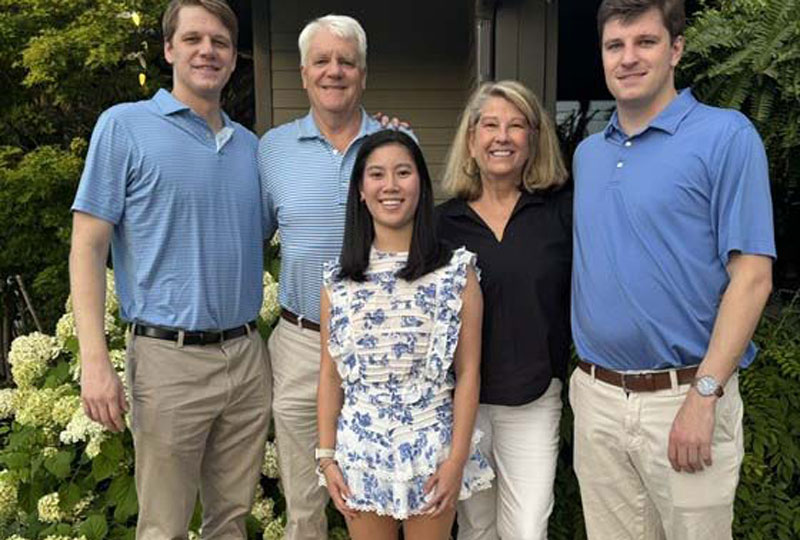
Six months later, Hornsby and her doctors dealt with organ-rejection problems. It was frightening, but under transplant nephrologist Schaefer’s care, she recovered. By early 2017, Hornsby was healthy and back to volunteer work, including with Monroe Carell Jr. Children’s Hospital at Vanderbilt. She and her husband were plenty busy, raising their twin sons – now 28 years old – and their daughter, now 20.
Eleven years after her kidney transplant, Hornsby is in good health. She has follow-up visits with her Vanderbilt medical team every six months. Those checkups monitor how well her anti rejection medications are working, and “most importantly,” she said, “what is my (kidney) function?”
“The kidney has held up pretty well,” she said. “I’ve been very fortunate.”
Meanwhile, although Hornsby no longer needed the kidney that would have come from the paired exchange, her cousin went through with the kidney donation to the man in Ohio.
“She was invested in the process,” Hornsby said, “and just did not want to sit back in her life and know that someone out there needed a life-saving kidney that she could give.” In 2026, Hornsby said her cousin was “doing great.”
Later, the family learned that the Ohio man’s wife was so grateful that she went on to donate her kidney, the one that would have gone to Hornsby, to someone else.
Expanding the kidney donor pool
The strategy of finding pairs of living kidney donors and recipients is an important one in terms of expanding the number of potential living donors. Vanderbilt’s kidney transplant team performs paired exchanges with other transplant centers, and in September 2021 hit a milestone: a four-way kidney chain donation among only Vanderbilt patients. Vanderbilt also participates in the National Kidney Registry, the nation’s largest paired kidney exchange program.
Advice for those needing a kidney
For those awaiting a kidney transplant, Hornsby has two tips.
First, spread the word that you need a kidney, she said, but in a way that invites people to learn about the process.
“I never asked for a kidney,” Hornsby said. “I just put a post on (Facebook), and I basically said, today I learned that I’m going on a medical journey that’s going to include needing a kidney in the future.” People responded, asking how to help. That was an opportunity for Hornsby to refer friends to the contact information for the Vanderbilt living kidney donation program. (Prospective donors can fill out a living donor interest form online or by calling 615-936-0695, option #2.)
That team can educate potential donors about what’s involved; you don’t have to explain details to everyone, Hornsby said. “You can’t ask for it. You just have to wait for people to find it in their heart to find out more.”
Second, she said, know when your kidney function drops to 20%, an important threshold. When you reach that point, you can go through the process of joining the UNOS waitlist for a donated kidney. Hornsby said that she was lucky because her medical care was at an institution like Vanderbilt where proactive patient care is a priority, and Ikizler referred her for transplant waitlist on a timely basis, which may not be true for all practices.
Patients living with chronic kidney disease don’t have to start dialysis or wait for their doctor’s say-so. Hornsby encourages people who have kidney function of 20% or less to call a transplant center to say they’re ready to talk with the transplant coordinators and start the process, if the referral has not been done by their provider.

Learn more about living donation
By becoming a living kidney donor, you can save a life. Find out if you’re eligible to donate a kidney.