How to quiet your mind before turning in so you can get a good night’s sleep.
We’ve all been there: It’s late at night, we’ve been tossing and turning in bed for hours, and we still can’t sleep. It’s not because our beds are uncomfortable or our rooms are noisy. It’s because of all the anxious thoughts running through our brains.
“Things tend to be harder emotionally at that time of day,” said Dr. Beth Ann Malow, a neurologist with the Vanderbilt Sleep Disorders Center. “It’s dark and we’re alone, and it gives us this unwelcome opportunity to have worries we might not be able to block out during the day.”
The longer you toss and turn and the more you start to worry about whether you’ll get enough sleep to face tomorrow, the more you start to spiral.
The key to a good night of sleep, said Malow, requires being able to silence your thoughts and worries and tune out the world. Fortunately, there are ways to do that.
Why we can’t sleep
There are two factors that contribute to anxieties piling up at bedtime.
The first is psychological: For many people, bedtime is the first chance they have all day to sit with their thoughts instead of distracting themselves with work, family and friends, or electronic devices.
The second is physiological: Many people like to wind down for the day by streaming a show or scrolling through social media, and the blue light from screens is very stimulating to the brain. “It’s like sunlight,” Malow said.
How to quiet your mind
Malow has several recommendations for quieting the brain before bedtime:
- Dim your screens. Most phones and computer screens have a night light option.
- Take a breather between time on your device and going to bed. Malow suggests a warm bath, a book or a non-screen activity like knitting.
- Avoid the news and social media. Refrain from late-night work emails and schedule potentially stressful phone calls with family members for earlier in the day. “If there’s some issue,” Malow said, “I don’t want to be thinking about it as I go to bed.”
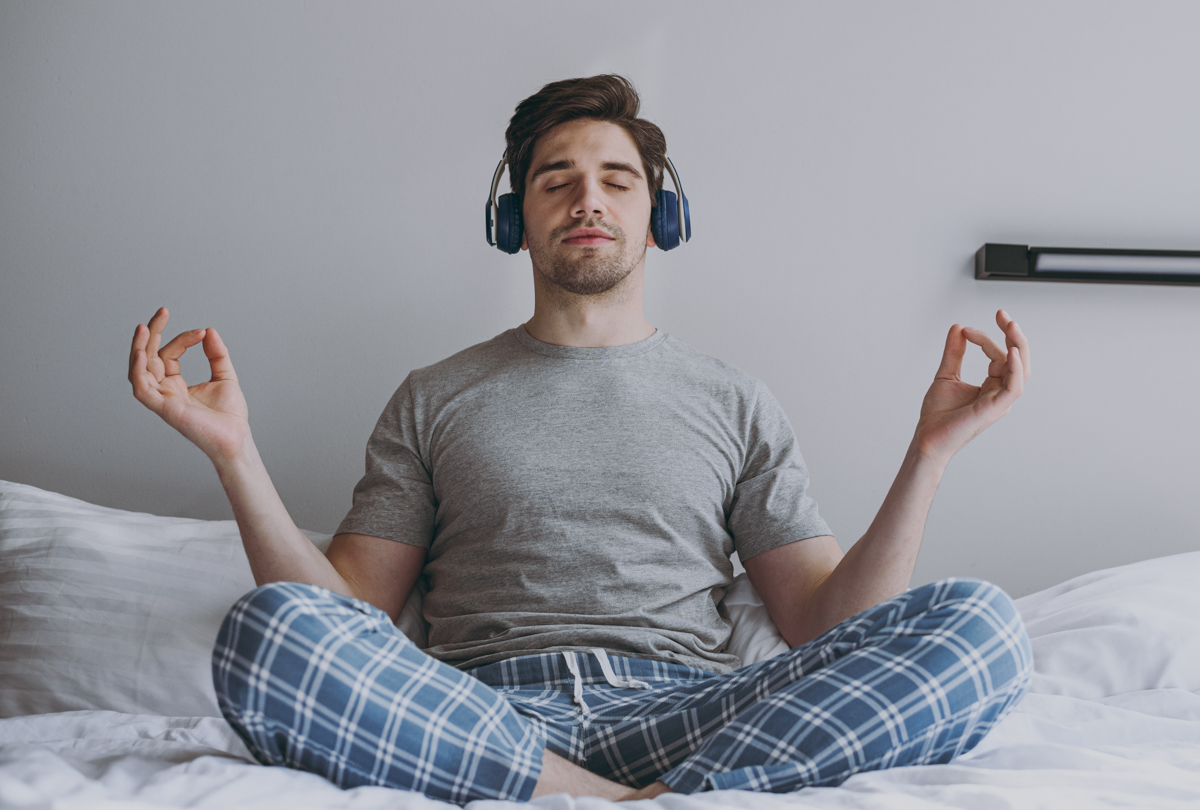
- Try a guided meditation. There are many apps available for your smartphone or tablet that can walk you through a bedtime meditation practice.
- Or try some gentle yoga, or deep breathing, like box breathing. (Box breathing refers to taking a long slow inhale, holding your breath for several seconds, letting it out in a slow exhale, and waiting several seconds before inhaling again. Repeating this sequence has a calming effect.)
What if I still can’t sleep?
If none of these strategies work and bedtime anxiety remains a problem, Malow advises visiting a sleep specialist. There may be other reasons for sleeplessness, like sleep apnea or menopause-related hormonal changes, that can be addressed through medical devices or medication.
Another option is cognitive behavioral therapy for insomnia (CBT-i), a form of talk therapy that targets behavior that may lead to sleeplessness, like lack of exercise or too much alcohol or caffeine. It also, Malow said, “allows us to turn off our negative cognitions about sleep or reframe them.”
No one, Malow emphasizes, should be afraid to seek treatment. “Sleep is just really important for our health,” she said. “It affects our weight, it affects our mood, it affects our hearts and brains.”

Tossing and turning?
The Vanderbilt Sleep Disorders Center treats patients with conditions such as sleep apnea and narcolepsy. Our experienced team of health care professionals is dedicated to helping people overcome problems that interfere with healthy sleep. Dedicated sleep labs in three locations in Middle Tennessee provide sleep studies with convenience and comfort.