Learn what to do — and not to do — after a concussion.
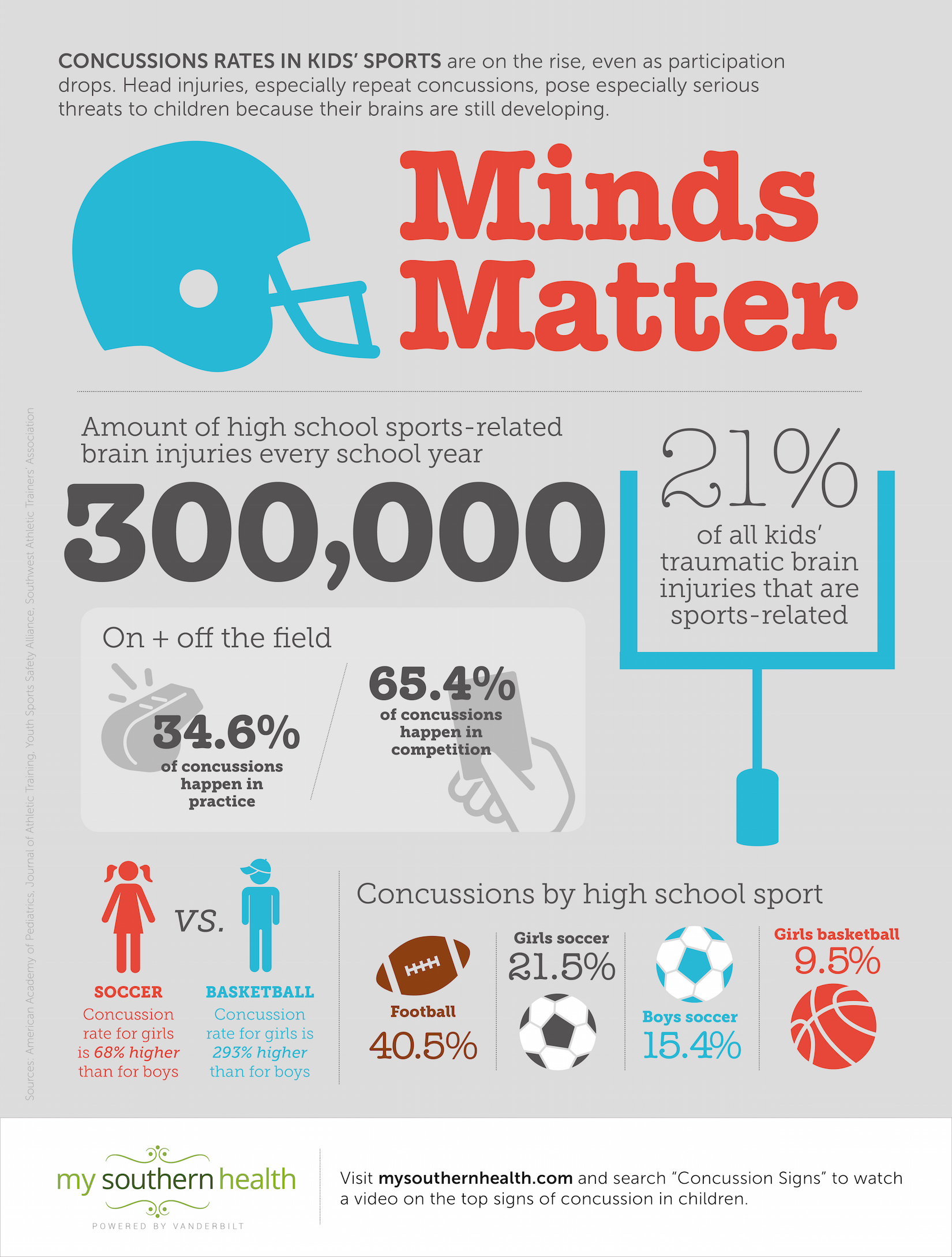
A concussion happens when a blow to the head or body causes rapid movement of the brain, leading to a temporary disruption in brain function.
There are myths about concussions, and what to do after someone is injured in this way. We asked Douglas Terry, PhD, a clinical neuropsychologist and co-director of the Vanderbilt Sports Concussion Center at Vanderbilt Neurosurgery to give us the facts about concussion care.
A concussion is also known as a mild traumatic brain injury.
“We typically think of a concussion as a hit to the head that alters your mental status,” said Terry. “That might mean you’re confused or disoriented, or you might have a gap in your memory at the time of the injury, or in some cases, you may lose consciousness for a few seconds or minutes.”
An athlete who gets hit on the playing field, for example, may not have a memory of one’s teammates helping them to the bench. However, an actual loss of consciousness, Terry added, is fairly uncommon, occurring in roughly 10% of concussions.
Other acute symptoms may include a headache, dizziness, fatigue and sensitivity to light and noise. Those symptoms could linger for a few days, along with problems with sleep and the ability to focus attention.
Myth: Every concussion requires a visit to the emergency room.
If you think you or a loved one has a concussion, it’s a good idea to visit urgent care or to call your primary care doctor. “But we’re typically not worried about life-threatening difficulties that would necessitate a high level of care like at an emergency department,” Terry said.
Fact: Some symptoms indicate the need for emergency care.
“There are some signs that you should go to the ER,” Terry said. “Those signs would be concerning and may be suggestive that what’s going on may be more than a concussion and that it actually might be a more serious brain injury or brain bleed.”
Watch for severe concussion signs: trouble keeping the eyes open, convulsions, unusual behavior, slurred speech, severe and unrelenting headache, or if someone is dazed and confused for more than just a few minutes. Vomiting just after impact is not uncommon, but repeated vomiting is cause for concern.
Myth: You shouldn’t let someone with a concussion fall asleep.
“If someone has a concussion without any red-flag (severe) symptoms,” Terry said, “it’s safe – and often beneficial – for them to sleep.” If fact, Terry said, depriving someone of sleep might worsen symptoms such as poor concentration, headaches, and irritability — making it difficult to tell which are related to the concussion and which are because of sleep deprivation.
Fact: If someone has severe symptoms, keep them awake.
Although a person can get some rest when exhibiting typical concussion symptoms, if they are showing signs of the more severe symptoms, keep them awake and seek immediate medical attention.
Myth: You must be on bed rest until your concussion symptoms completely go away.
“Do we want you to take it easy for the first one to three days after a concussion? Yes,” Terry said. “But do we want you to cocoon yourself in a dark room for several days or weeks? No. That may actually delay recovery.”
Research shows that strict rest beyond a few days is associated with worse outcomes. In these cases, research found, it takes longer for the concussion to heal, the person has worse psychological symptoms and their body becomes deconditioned. Deconditioning is when your brain and body become “out of shape” because they’re doing so little. When someone becomes deconditioned, they may find that doing normal activities increases their symptoms. This may not be because of the concussion, but instead because their brain and body aren’t used to these activities anymore.
Fact: Concussion recovery is an active process.
“Most research suggests that a single concussion does not cause any long-term cognitive issues. Most people recover completely within a couple weeks,” Terry said.
“A more active recovery process is associated with quicker recovery times,” Terry said. Activity levels can start to return to normal a few days after a concussion. He added that it is helpful to start with activities around the house or to try a short walk to see how you feel.
Students can typically return to school within a few days, starting with half days at first. The same advice applies to returning to work.
“If you develop a headache,” he said, “take a step back and try a task again in an hour or two.” You may find that making accommodations — such as turning the brightness down on screens — helps during the first few days following the concussion. But you will slowly want to decrease your use of these accommodations so your brain can slowly and safely learn to handle normal sensory input.
“If you are having difficulty engaging in these active recovery processes,” Terry said, “or if symptoms last more than a couple weeks, then it would be time to see your doctor and try to come up with a more specific plan that might involve some specialists.” Specialists can help treat lingering symptoms, such as headaches or balance problems.
“Current evidence suggests that a single concussion is unlikely to result in any long-term cognitive issues,” Terry said. “Most people recover completely within a couple weeks.”
Tennessee’s only Sports Concussion Center
Vanderbilt has the only Sports Concussion Center in Tennessee staffed by specially trained sports medicine doctors, neurosurgeons, neuropsychologists, physical and occupational therapists and certified athletic trainers. The team has the expertise and technology to manage all aspects of concussion care, including baseline concussion testing before an injury, and evaluation and treatment if one happens. To schedule baseline concussion testing, visit the link below.